Atlanta’s retaining walls work harder than most. Steep lots, heavy rain, and Georgia red clay push relentlessly against every structure. The real question homeowners ask is simple: how long should a retaining wall last here, and what shortens that lifespan? With proper design, drainage, and maintenance, a wall can serve for decades. Without those, failure can start in a few seasons.
Heide Contracting repairs and rebuilds walls across Atlanta, GA, with an engineering-led approach that fits the Piedmont terrain. This guide explains realistic lifespans, why walls fail, and how to protect an investment before it turns into an emergency. For homeowners searching for retaining wall repair Atlanta, it offers clear direction based on local field experience.
Typical Lifespans by Wall Type in Atlanta
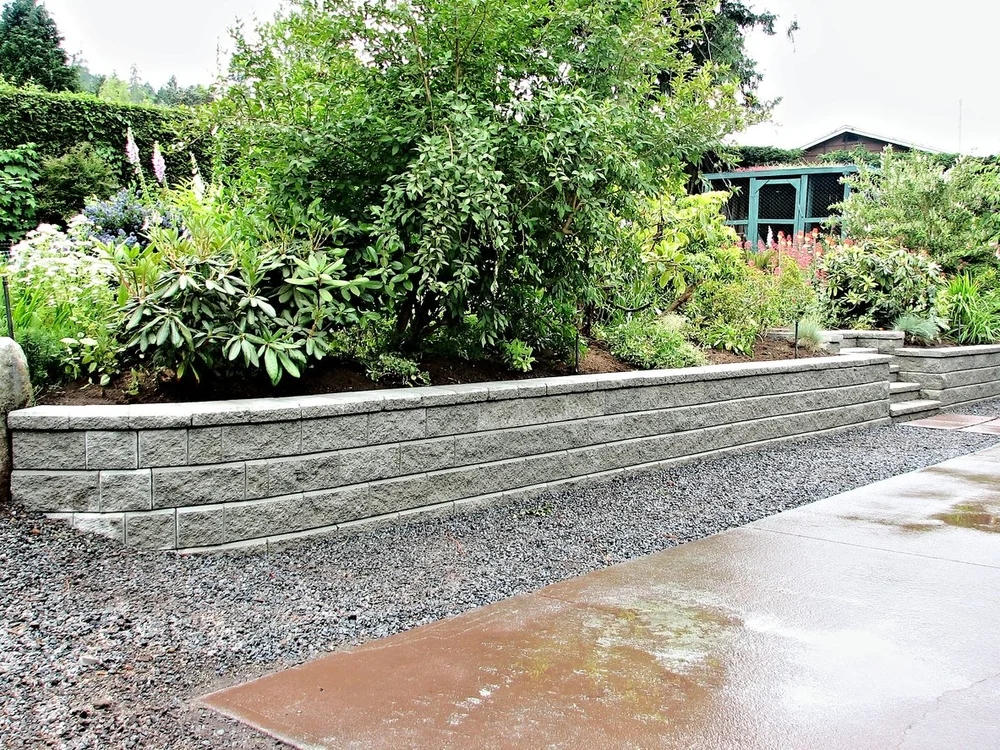
Segmental retaining walls (SRW) built with modular block often last 25 to 50 years when installed with proper geogrid, gravel backfill, and drainage. Many Atlanta installations fail earlier due to missing weep holes, clogged drains, or poor compaction behind the wall. When built to spec with brands like Belgard, Allan Block, or Keystone, these systems hold up well against Atlanta’s storm cycles.
Masonry walls, including reinforced concrete or CMU with a veneer, can last 40 to 60 years. Success hinges on footing design, rebar, weep holes, and a reliable French drain. Crumbling mortar, long vertical cracks, or bulges are early signs of trouble.
Timber tie walls age faster in this climate. Expect 15 to 25 years, often less on shaded, wet slopes. Rot, termites, and fungal decay attack even treated lumber. Once the deadman anchors decay, the wall can lean within months.
Gabion baskets resist erosion and drain well. They can last 30 to 50 years if baskets use galvanized or PVC-coated mesh. In red clay, filter fabric and proper backfill are essential to prevent soil migration.
Gravity and cantilever concrete walls vary. A well-engineered cantilever wall with proper footings and drains can outlast most structures. A gravity stack built without geogrid or anchors may start to tilt as loads increase over time.
Why Atlanta Walls Fail Sooner Than Expected
The Piedmont’s hilly lots and dense red clay create hydrostatic pressure behind walls. Water cannot pass through clay quickly, so pressure builds after storms. That pressure pushes, tilts, and bows structures. In neighborhoods like Buckhead and Chastain Park, where slopes are steep and homes sit high above the street, the loads are unforgiving.
Drainage is the main factor. Without a clean gravel backfill, filter fabric, and a working French drain with daylight, water gets trapped. Clogged weep holes are common in older masonry. Timber walls suffer as rot progresses from constant moisture. Soil erosion, sinkholes behind the capstones, and washed-out backfill show that the drainage system has failed.
Lot changes also matter. New patios, pools, or downspouts dump water into the backfill. Tree roots push behind the wall. Vehicle loads near the top edge raise the surcharge. Over years, these small changes add up and shorten the wall’s life.
How to Spot a Wall Nearing the End
Homeowners often see the warning signs months before a collapse. Leaning or tilting is the clearest sign that hydrostatic pressure has overcome the wall’s resistance. Bowing through the middle course indicates geogrid failure or inadequate embedment. Large cracks, sheared capstones, or crumbling mortar show structural distress. Timber walls reveal rot where soil meets wood. Soil migration, sinkholes, or washed fines at the toe point to failed filter fabric or drains.
In 30306 and 30327, where older timber walls line long driveways, Heide Contracting frequently encounters deadman anchors that have rotted away. A client in Virginia-Highland had a 20-year-old wall tilt six inches in a season after record rain. Drainage correction and helical anchors brought it back within tolerance without a full rebuild.
How Long Can Repairs Extend Service Life?
With engineering-led repairs, many failing walls can gain 10 to 30 more years. Tie-backs, helical anchors, and geogrid reinforcement re-establish connection to stable soil. Drainage upgrades cut hydrostatic pressure. For timber or masonry, deadman anchors improve resistance. For SRW systems, adding geogrid layers and rebuilding select courses restores alignment. When a wall is beyond rescue—severe bulging, inadequate footing, or widespread rot—a full rebuild provides the safest path.
Heide Contracting uses Simpson Strong-Tie and helical solutions for tie-back systems. For segmental walls, the team integrates Keystone or Belgard-compatible components. The goal is structural stability backed by a drainage plan that suits Atlanta’s weather.
The Role of Drainage and Backfill
Every long-lasting wall in Atlanta shares a common feature: smart drainage. A perforated French drain set behind the base course, wrapped in filter fabric, and carried to daylight is the baseline. Clean, angular gravel backfill relieves water pressure and improves compaction. Weep holes in masonry allow water to escape. Without these parts, the wall must fight both soil loads and trapped water. Over time, water wins.
Heide Contracting’s crews open walls to fix what is behind the face. They clear clogged drains, install new fabric, reset base courses, and make sure outlets discharge properly. A drain that stops short or ties into a clogged line will fail again.
Engineering Decisions That Affect Lifespan
A Professional Engineer (PE) may recommend geogrid layers at specific elevations, deadman anchors for timber, or helical anchors for larger failures. Footing size and depth change with soil type and surcharge. In dense red clay, compaction and benching the slope behind the wall make a major difference. For walls over 4 feet in Atlanta, an engineered plan and permit are typically required. Heide Contracting designs and builds to Georgia residential code and documents every stage for inspection.
Atlanta Neighborhoods and Site Conditions
Local conditions vary across the city. Midtown and the BeltLine corridors often have flat lots with high groundwater after storms. Buckhead, Chastain Park, and Vinings sit on steep ridges with long runs of terraced walls. Virginia-Highland and Morningside have aging timber walls installed during remodels from the 1990s and early 2000s. Druid Hills and Ansley Park feature historic masonry that needs careful reinforcement, not just a face-lift.
Heide Contracting serves 30327 and 30305 estates with complex grading near Bobby Jones Golf Course and the Swan House area, plus historic 30306 properties around Virginia-Highland and Morningside. The team also works across Sandy Springs, Brookhaven, Decatur, Roswell, Marietta, Dunwoody, and Vinings. Proximity to Piedmont Park or the High Museum of Art is a common reference point for site access and permitting guidelines.
Repair Methods That Work in Georgia Red Clay
Heide Contracting stabilizes walls with a blend of structural and drainage solutions. For leaning timber or masonry structures, crews use deadman anchors or tie-backs set into stable soil. For large-scale failures, helical anchors tie the wall to the embankment. Segmental block systems gain strength from new geogrid layers and a corrected base. Filter fabric prevents fines from clogging gravel. Footings and capstones get reset to eliminate wobble and seal pathways for water. Many projects include new weep holes and a French drain with daylight to prevent pressure from rebuilding behind the wall.
What Extends Lifespan Year After Year
- Keep outlets clear and verify the French drain flows to daylight before the rainy season. Redirect downspouts and sump lines away from the backfill zone. Maintain a setback from the wall crest for vehicles, sheds, and heavy planters. Replace soft or rotted timber elements before they compromise anchors. Monitor the face line each spring; act when tilt exceeds a few degrees.
Cost and Timing: Plan Before the Rain Arrives
Most repairs cost less and last longer when addressed early. A wall that leans one to three inches often stabilizes with drainage correction and anchors. A wall that leans six inches, with bulging and cracks, may require partial rebuilds. Material choices matter. Belgard, Keystone, and Allan Block components add durability and maintainable finishes. Pavestone systems are common https://pub-3fb81553dec8447e9f78cc13238c2c70.r2.dev/atlanta-retaining-wall-contractors/retaining-wall-contractor.html in Atlanta and can integrate with new geogrid and backfill during a repair.
Lead times tighten before summer storms and during fall rain cycles. In Buckhead and Brookhaven, access constraints on steep drives may add time for staging. An engineering-led plan prevents surprises and keeps inspectors aligned with code for walls above 4 feet.
How Heide Contracting Approaches Retaining Wall Repair
Heide Contracting’s process begins with a Structural Wall Evaluation. A PE reviews site grading, soil conditions, and drainage. The team documents hydrostatic pressure points and soil migration paths. The repair plan specifies parts such as geogrid, tie-backs, deadman anchors, weep holes, and a French drain. All work aligns with Georgia building codes, with permits pulled for heights that require them. The company repairs and reinforces systems from Belgard and Keystone, and integrates Simpson Strong-Tie anchors where needed. For high-end projects, Allan Block and Redi-Rock solutions provide long-term stability.
Service Area and Local Insight
Located near the Chastain Park area, the team understands the steep lot grades of Northwest Atlanta and the saturation issues found along the Atlanta BeltLine. They handle projects near Piedmont Park, Swan House, and throughout Buckhead, Midtown, Virginia-Highland, Ansley Park, Inman Park, Druid Hills, and 30327, 30305, 30306, 30309, 30319, and 30342. Neighboring areas include Sandy Springs, Brookhaven, Decatur, Roswell, Marietta, Dunwoody, and Vinings.
Atlanta Retaining Wall Repair FAQ
Do I need a permit? In Atlanta, walls over 4 feet typically require an engineered plan and a permit. If terraced walls act together and exceed 4 feet, the same rules apply.
Can a leaning wall be saved? Many can. Tie-back systems, helical anchors, and drainage correction stabilize a leaning wall and stop further movement. Early action increases the odds.
Why do walls fail in Georgia? Heavy rainfall, dense red clay, and steep grades build hydrostatic pressure. Poor backfill, missing weep holes, and clogged drains speed up failure.
What parts matter most behind the wall? Clean gravel backfill, filter fabric, a French drain to daylight, and functioning weep holes. Add geogrid, deadman anchors, or helical anchors when loads are high.
How fast should I act? If tilt is visible or soil is escaping, schedule an evaluation soon. Small problems cost less to fix before the next retaining wall contractor Atlanta storm cycle.
Ready for a Clear Answer on Your Wall’s Lifespan?
Heide Contracting provides retaining wall repair in Atlanta with structural engineering at the core. The team mitigates hydrostatic pressure, restores alignment, and designs drainage that works for Georgia red clay. Contact Heide Contracting to schedule a Structural Wall Evaluation. The team will determine whether your wall needs localized repair or a full rebuild and deliver a code-compliant plan. For homeowners searching for retaining wall repair Atlanta in Buckhead, Midtown, Virginia-Highland, or 30327 and 30306, this is the most direct path to a safe, long-lasting solution.
The Bottom Line on Lifespan
A well-built wall in Atlanta can last decades. The key is what sits behind the face: weep holes, French drains, clean gravel backfill, and reinforcement that handles real loads. With the right plan, a failing wall can return to stable service life. With delay, failure accelerates. Heide Contracting stands ready with engineering-led repair strategies for timber, masonry, and segmental retaining walls across Atlanta, GA. Schedule your assessment and protect the slope before the next storm.
Heide Contracting provides construction and renovation services focused on structure, space, and durability. The company handles full-home renovations, wall removal projects, and basement or crawlspace conversions that expand living areas safely. Structural work includes foundation wall repair, masonry restoration, and porch or deck reinforcement. Each project balances design and engineering to create stronger, more functional spaces. Heide Contracting delivers dependable work backed by detailed planning and clear communication from start to finish.
Heide Contracting
Phone: (470) 469-5627
Website: https://www.heidecontracting.com, Google Site
Social Media: Instagram, Facebook, LinkedIn
Map: View on Google Maps